Tuesday, June 24, 2008
Nubra Valley... Ladakhi Heaven
Pangong Tso... Ladakh and Tibet
Kashmir... Landing in Leh
Monday, June 16, 2008
Nepal 2.0
On our final day, taxi strikes meant that we had to convince a private tourist taxi to return us to the airport. We set off cautiously, but within 3km of the international airport, perpendicular busses, abandoned cars, and loitering locals blocked our path. Our driver refused to go on, and with circumspection I discretely slipped a wad of Nepalese rupees into his hand amidst the protesting taxi drivers. With an hour until our flight we began running through the protest until we eventually found a pioneering and capitalistic taxi driver who, for double the price, agreed to drive us on the other side. In a confident push through airport logistics (entry, airport tax, boarding pass, baggage, customs, and security), we made our flight.
Thursday, June 12, 2008
Real World: Gurgaon (Season 1)
The New York Times, on June 9, covered the duality of life that exists in Gurgaon in far more eloquent prose than me, though it failed to address the relationships that exist between residents and staff. Though we have six members of our own house staff cooking, cleaning, and managing various activities, we also watch cricket with them, practice Hindi, and learn about their homes and lives. They make chai; we make conversation. But the NYT article highlights the divided world of gated apartment and slum-life that's increasingly visible in Indian metropolises. In cities like Bangalore, Hyderabad, Bombay, and Delhi NCR (Noida and Gurgaon) where the educated 0.7 percent of the 1.1 Billion people work predominately in outsourced IT jobs (Source: Edward Luce) bifurcated communities are certainly evident.
Cycle rickshaws still patrol the streets, curbsides are crumbled and littered with the tents of road-side slums. The vibrant colors of residents ornament the dusty scene as usually seen through tinted windows of honking vehicles. In Gurgaon I find smiles are common, though most of my co-workers complain of local crime. I realize that my reception as a foreigner on the street is perhaps different, my involvement in street life is usually novel, and novelty inspires smiles in otherwise sad and desperate lives. Those with whom some interact when leap-frogging between the shopping malls that moonlight as oases, are not bad, but they are desperately poor. Some cite visiting malls as the only activity in Gurgaon. As Rory Stewart would agree, it's only The Places In Between that matter. The ubiquity of the desperately poor does not impact the extent to which luxury in India is available and growing; however, the fact that Mercedes and Burberry exist does not mask the truth that India has egregious resource allocation issues with consequences of the highest magnitude.
Wednesday, June 11, 2008
Dhaba... Dhaba
With evenings occupied by video conferences with California and Euro 2008 football matches, I've recently found that I don't remember dinner until late-night. Last night, under the buzzing lights of a nearby office building, I frequented a 24-hour Dhaba in Gurgaon with my Chennai friend. Dhabas are road-side restaurants. Steam and smoke mix under the glow of street lamps. Behind a tattered billboard, and on an uneven dirt patch, plastic chairs and tables are packed for midnight snacks. The waiter accosts us, and shouts our orders over 100 others to the kitchen. There are no menus. Men and women hunch over flat aluminum plates, their fingers drip with dal and ghee from their hot parathas. I order a chai, dal makhani and two parathas.
The experience costs me Hindi embarrassment and 60 rupees.
Sunday, June 8, 2008
CR Park Birthday
A Pile of Shoes
IndoChine and Mbeki
When we returned to the Taj Mansingh on Sunday morning for brunch, the security and clientele was slightly different at the latter half of the weekend. Seated aside a camera-man, and receiving a text from a World Bank friend, I determined that the newest addition metal detector was not so much decorative as it was preparation for Thabo Mbeki, the President of the Republic of South Africa. He's no Shane Warne like in Bombay, but exciting nonetheless.
Monday, June 2, 2008
Home Sweet Gurgaon
Campai Mumbai
When I arrived into Mumbai on Friday evening, I was giddy with excitement, and in the dizzying heat I commissioned a taxi to the Taj Mahal Palace Hotel & Towers for 300 Rs, a 90 minute ride that cost $8. Inching by Marine Drive in the back seat of a Bombay black and yellow non-AC taxi in 42 degree C 8pm heat, I could not have been happier. Bombay has become one of my favorite global cities. Watching the skyline inch higher over the past year, I can tell that this is a city of the future, if not the present. If I were to describe Bombay, it's the pace of New York, the glamour of Hollywood, and the immediate access to local cuisine, street food, and real-life that one finds in a back-alley neighborhood. Even the richest people seem to know the best place for 20 Rs street chaat. It's grit and urbanity, a kaleidoscope incarnate.
Friday evening we ate at Wasabi in the Taj, an acclaimed Japanese restaurant run by Masaharo Morimoto, the Japanese iron chef. Over a sake bomb, in a private dining quarter in which we sat seated at a round table nested in a dome windowed alcove looking out over the India gate, we cheered Japanese style, "Campai, Mumbai!" Saturday night, after rooftop drinks at The Dome, an incredible glass-walled belvedere atop Marine Drive's Intercontinantal Hotel, we visited a restaurant called Khyber for delicious frontier style food, and Sunday brunch at Olive Bar was fitting for Bollywood. In the posh Pali Hills suburb of North Mumbai, we discreetly pulled up in our dilapidated non-AC taxi into the languid Prada-clad melange of Bombay's in-crowd. We were inside, but more obviously on the outs.And in between our opulent culinary endeavors, which seemed to be the running theme of the weekend, I strolled the sweltering streets of Colaba and Fort, entertained the adventures of Shantaram in Colaba's famous Leopold's Cafe, and read the entirety of One Thousand Splendid Suns poolside on Saturday. Contrasts such as these make one appreciate moments.
Boarding our delayed flight from Bombay on Sunday evening, the runway end was crowded by hundreds of people sitting on rooftops and loitering outside a nearby mosque. As the plane rounded the tarmac, I realized that they were all onlookers. There was no cricket match, and there was no entertainment except us, those people fortunate enough to board planes to other worlds, far away from the poverty and squalor that exists for most of Mumbai's 12 million residents. As the engines roared, the rushing wind gave lift to our wings, and in our escape we became but the fleeting entertainment of a hapless mass, making ends meet in the shacks that line the runway's end. The activities of my two days were vacation, but fuel the perspective on opportunity and fortune that must impel us to be cognizant of the disparities that are globally ubiquitous. That which makes us content without also making us good is selfish.
Monday, May 26, 2008
Giacometti in Singapore
After a brief tryst with the West, a month-long journey during which time I ate reindeer steak in Finland and watched a dwarf sing karaoke on a ferry to Estonia, I've returned to India. True to form, in the last 10 days I've been between Philadelphia, DC, San Francisco, Hong Kong, Singapore, New Delhi, and Bombay. Life moves fast, but when the dust settles, not a whole lot has changed except my time zones. After spending a great day in Singapore, where I toured an Alberto Giacometti exhibit at the Singapore Art Museum, drank a Singapore Sling at the Raffles, walked the quay, and had a five-dollar shower in the airport (amazing!), I boarded my final flight to India. As I landed in New Delhi last night I smelled familiar smells, heard familiar sounds, and saw familiar sites. This has, after all, become my home. It is host to a year of my youth, and 4 percent of my life. It's a part of me, for better and for worse. The dialectic is powerful, and at every turn I find myself experiencing contradictory feelings of frustration, elation, resignation, and excitement.

India has taken part of my life away, and at the same time, made me a better person for having experienced something that so many other dare not embrace. As I looked over the serene Pacific from Highway 1 in Northern California, watching a perfect sunset, I knew it would appear different a week later over Marine Drive in Bombay. It would be accompanied not with serenity and sand, but with energy and vibrance, not with pensiveness, but with camaraderie, surrounded by eyes and smiles of scores of onlookers. As I squint through the hazy morning sky of Gurgaon, where a blanket of dust and smog obscures newly constructed glass edifices, I consider my health and the consequences of my location; As I step over the littered pieces of discarded lives, sandals, dusty cloth, paan wrappers and crumbled curbsides, I question the failures of a resource-rich country with gross governmental mismanagement; As I turn on the radio I realize I'm in touch with Indian, and not American pop culture, as I know the lyrics, gossip, and movies from which each song hails.
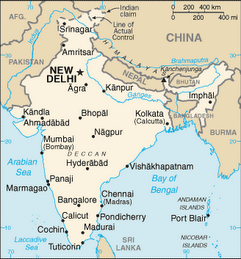
I will depart the sub-continent in July in person, but it has become part of me in practice. My relationship with her is complex. I love her virtues, but I despise her shortcomings. For every religious beauty there is a political fault; For each linguistic plurality there is a bureaucratic ultimatum; For each cultural purity there is a breath of carbon emission that makes one long for the clear skies of Los Angeles or Mexico City, and demand a better alternative than Kyoto; For each Bollywood ideal there is a system that cannot provide for its own people. I am Californian, and 4 percent Desi. That's a proud, and dismal truth.
Saturday, April 26, 2008
Delhi to Helsinki

When I reflect on the last 14 days, I've been in 7 cities on 3 continents. Jet lag only begins to explain my state of mind. Our final days in Delhi pre-departure were replete with active days and nights, hot afternoons in CP, Bollywood hits, lunch coffees at Barista, a night of talking Harare politics over Tiger beers with two Zimbabwe friends, and fantastic steak dinner and drinks at Smokehouse Grill in South Ex. Before my departure, and hiatus in California, we organized a feast amongst friends at the apartment, and managed to convince three non-residents to make the trek to Gurgaon. As our conversations moved from the ethics of development to stupid humor, and as my house manager, Kapil, embraced me and apologized for any sins or troubles he had caused me, it only reaffirmed to me that bonds grow strong quickly in new worlds. I dismissed Kapil's appeal with my jocular nickname for him, "Sri Baba Kapil ji," but was moved by the extent to which relationships in India, despite their often disturbing stratification, are genuine, poignant, and resolute.
After a three-hour delay at the appalling Delhi International Airport (the worst capital city airport I have ever been to, except for perhaps San Salvador) I boarded my FinnAir flight to Helsinki at 4am. Despite months of joy, a few hours in Delhi International can affirm any seeded desire to return home, and leave you counting down the delayed minutes until departure. But when I arrived in Helsinki, Finland, I immediately missed the chaos and color of India. I stepped into fresh, clean, Nordic air under a deep blue sky. Before me new C-class Mercedes passed one after the other as airport taxis, gliding over clean cobbled streets. Although with each breath into my lungs I felt as though I gained strength post-Delhi pollution, and although I could have eaten my lunch directly off the pavement it was so clean, I immediately missed the vibrance of India. I missed the camaraderie that is ubiquitous; I missed the smiles and the bobbles; I missed the momentary entertainment that is a rickshaw negotiation, a languid buffalo, a paan-wala tout, or a carefree shoeless child that protects a makeshift wicket with a stick. India is uniquely complex, and while riddled with problems, it retains an endearing quality that is deeper than the superficial foreign understanding of its squalor and crowds. India is alive.
Sunday, April 20, 2008
UP Nights... Films, Barat, and Kulfi
An afternoon by the Taj pool, and a fantastic book, "In Spite of the Gods" later, I embarked for a movie at the local cinema. The first Pakistani movie to show in India in many years, I chose to watch a well-rated film called "Khuda Ke Liye," or "In the name of God." Though the movie was in Urdu, its spoken form is remarkably similar to Hindi, and so I managed the basics that along with visual tips allow for decent understanding. Khuda Ke Liye was a fantastic movie that, while lacking in much acting prowess, articulated a complex modern Pakistani, and Muslim, dynamic in the post-9/11 world. A British Pakistani girl is married by her father, and against her will, to an extremist cousin in Waziristan, marooned in Western Pakistan to the chagrin of her feckless mother. Captive in a Pashto village, the protagonist battles between accepting a culture unknown to her, but her own, and squelching a hatred for her father. Her husband, a young musician turned rock-to-faith, joins in a battle alongside the Taliban as his progressive brother moves to Chicago to marry his American love. While one man lives free, another is persecuted as an extremist. All too familiarly, a World Bank friend explained the plight of a former Stanford classmate of ours who was deported, despite a fervid love of American opportunity, for having studied Chemical Engineering. Thursday, April 17, 2008
Now... Lucknow
Wednesday, April 16, 2008
By Elephant or Indian Rail
Saturday, April 12, 2008
College Tour 2008
Despite the tranquility of our sunny afternoon, my friend explained to me issues that cause academic concerns. In the past five years government scholarships have grown to address Scheduled Castes (SC) and Scheduled Tribes (ST) in funding, in addition to need-based funding for families who earn under 1 lakh rupees ($2500 per year). Preferential treatments, however, are controversial. Members of ST, and students who speak one of 24 specified languages, can take their pre-college exams in their mother tongue. Though locations change, some fundamental inequalities are issues that transgress international boundaries.
Tuesday, April 8, 2008
Bollywood Politics
When asked by a DC friend how the China-Tibet issues were surfacing in India, I had to reply that I hadn't heard much about it recently, as the news has been dominated by far more important issues. Bizarrely, the quibbles between Bollywood and local regional politicians is more news-worthy than Chinese incursions and draconian actions against peace-loving people in Tibet. For example, in the past weeks, news has been drowned in the absurd dialogue between fringe-party Shiv Sena ("Shiva's army") and Bollywood superstar Amitabh Bachchan. Shiv Sena leader Bal Thackery of Bombay claims that the superstar, originally from Uttar Pradesh (UP) but made a star in Maharashtra, hasn't done enough for the state that brought him riches.
At the same time as Bachchan is derided by a xenophobic regional leader for his dismissal of Maharashtran issues, another Tollywood (not Bollywood) superstar from Karnataka, a ridiculous Sly Stone action hero named Rajinikanth, has been lionized by Thackery for his commitment to Tamil Nadu on issues related to local water. Despite his roots in Karnataka, Rajinikanth's siding with Tamil Nadu (TN) is precedent for Thackery's absurd public excoriation of Bachchan. It amazes me that this news eclipses neighboring China's aggressive measures just North of the Indian border. But when it comes to Bollywood and Cricket, the sub-continental notion is clearly "do not disturb."
Sunday, April 6, 2008
Worlds Between
Over the past week, as I walked alone through Old Delhi's Chowri Bazaar, my thoughts tumbled slowly through my mind as my body negotiated the surrounding chaos. The dichotomies envelope my every moment, thought, surrounding, and intention. As a dusty man sleeps atop crumbled concrete, I dismiss my haste with a claim that I am powerless to help one man, and that I will devote my efforts to affect broader change. But sometimes the demands of time and commitment and comfort deceive the good intentions of decent people. Intentions become excuses and then they become the fodder for champagne toasts; they become the stories of reflective prose; they become a lingering guilt that grows into indignation and questions what others have failed to achieve, and not what one's self has failed to demand.
But as I've vomited bile from the window of a cab, alone in Calcutta, I no longer desired the hard adventure that ostensibly broadens us, and defines us in youth. I craved comforts, and I had the audacity to desire them as I passed Kolkata slums. Moments in India challenge compassion and humanity; they challenge self-definition; moments make us question who we are and what we believe in. Some raise a glass, and others raise a fit. The truth is, many people do both, existing in the hypocritical world of dichotomies that appeases both our human desire for comfort, and our privileged but genuine philanthropic vanity.
Sunday, March 30, 2008
PVR "Bringing Smiles"
As is inevitable in India, one will encounter a set of arbitrary 'rules' for which no logic is sufficient for understanding. Pretenses are a favorite on the sub-continent, and enforcement and actual sense are less common. For example, each day I walk through a rectangle of two-by-fours which rifles off a loud beep to a man standing nearby who never looks up from his newspaper. Why then have the 'metal detector' if the goal and end of its positioning is not enhanced safety? Employment, I suppose.The same illogical application of rules worms its way into diurnal activities. Today, as I attempted to enter PVR cinemas, a venue which prides itself on its 'bringing smiles' advertising campaign, I nearly thrust my fist through its colorful facade. After passing through a set of two-by-fours, being frisked by three separate men, and emptying the contents of my small backpack, my chewing gum box was confiscated and I was told I could not enter with my bag. Understanding the stupidity of nearly all Indian rules, and the flexibility with which they are typically enforced, I asked in a number of increasingly simplistic ways if I could both keep my gum and enter with my bag. Now, I understand the logic of no chewing gum in a theater, but why confiscate a stale pack at the bottom of my bag when the teenage girls around me chomp away on Trident? Wouldn't it make more sense to employ a dental agent at the door aside the two-by-fours prying gum from under each person's tongue? Ok, well perhaps it's no better. But to the second point, that bags are not allowed in the theater, my counter-argument was obvious: we're in a shopping mall.
Unyielding to even my most simplistic and sycophantic requests, I erupted into a slur of expletives, and leaned into the man's hollow face, shouting at him and excoriating his lemming-like dearth of purpose. I eventually gained entrance to the theater and watched a dreadfully bad movie that, as its highlight, featured Bipasha Basu dancing. Arbitrary rules, lack of context, and idiocy with which they are invariably enforced is painstaking across India, and affirms my desire to land on Finnish soil in three weeks. I hope that as I board my FinnAir flight, the tranquility promised bears more veracity than PVR's successfully well-orchestrated 'Bringing Smiles' campaign.
Subscribe to:
Posts (Atom)